

How to Move a Treadmill Without Damaging It (or Your Floors): Step-by-Step Guide
Quick answer: unplug the treadmill and remove the safety key, photograph and disconnect the console wiring, take off the console and handrails if the manual allows it, fold and lock folding models, wrap the deck and the motor hood in moving blankets, roll it on its transport wheels or a furniture dolly over floor runners, and on stairs carry it with two people with the heavy motor end kept low. Treadmills weigh 150–350 lb, so if there are stairs, a condo elevator or a car involved, read the sections below before you start.
How heavy is a treadmill?
| Type | Typical weight | Typical folded footprint |
|---|---|---|
| Compact / walking pad | 60–100 lb | fits under a bed |
| Folding home treadmill (NordicTrack, ProForm, Sole F63…) | 180–260 lb | about 70 × 36 in standing |
| Non-folding home treadmill (Sole F85, Horizon 7.8, Bowflex T22…) | 250–350 lb | 80 × 37 in |
| Commercial treadmill (Life Fitness, Precor, Technogym) | 350–450+ lb | does not fold |
The motor sits at the front under the hood, so the front end is much heavier than the back. That matters on stairs.
What you need
- Two adults (three for non-folding or commercial models)
- The owner's manual (or the brand's PDF online)
- Screwdriver and the Allen keys that came with the machine
- Zip ties or a moving strap, 2–3 moving blankets, stretch wrap
- A furniture dolly, and floor runners or flattened cardboard
- Zip bags and tape for the hardware, phone for photos
Step 1 — Unplug, remove the key, photograph
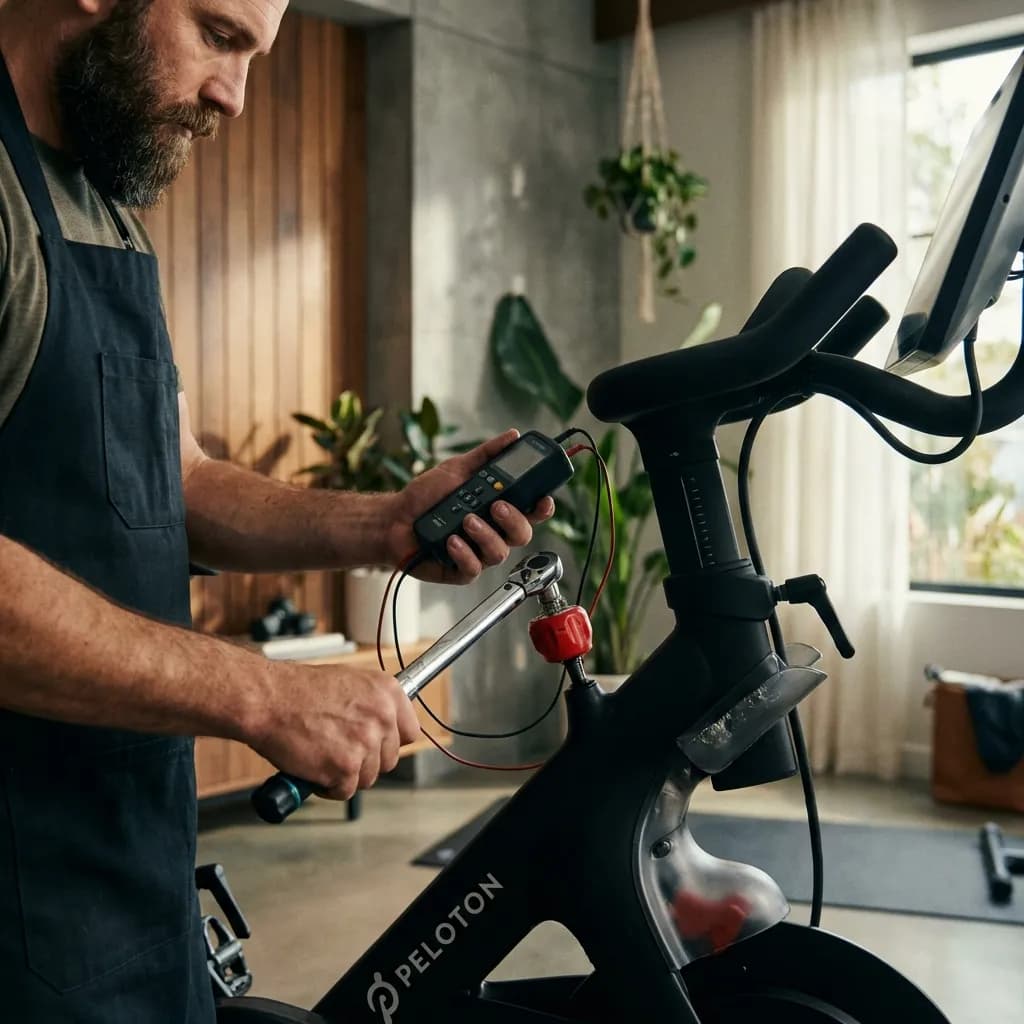
Unplug the power cord and remove the safety key so the belt cannot start. Take photos of the console, the wiring connectors and the hardware before you remove anything — you will thank yourself at reassembly.
Step 2 — Remove the console and handrails (if the manual allows)
On most home treadmills the console comes off with four to eight bolts, after you disconnect the wiring harness that runs up the right upright. Pull the connectors apart by the plugs, never by the wires. Wrap the console in a blanket and put it in a box; put the bolts in a labelled bag taped to the frame. If the manual says the uprights are not meant to be removed, leave them on.
Step 3 — Fold and lock, or secure the deck
Folding models: raise the deck until the latch clicks, then add a strap or zip tie through the frame so it cannot drop open on the stairs. Non-folding models: strap the deck and the uprights so nothing swings.
Step 4 — Protect the machine and the floors
Wrap the motor hood and the deck edges in blankets and stretch wrap. Lay runners or cardboard along the whole route — a treadmill rolled directly on hardwood or tile will scratch it. Never drag the deck.
Step 5 — Move it on flat ground
Most folding treadmills have transport wheels at the front: tip the folded machine back slightly and roll it. For non-folding or heavy models, slide a furniture dolly under the front (motor) end and have the second person lift and steer the back.
Step 6 — Stairs and tight corners
- Two people minimum; three for anything over 250 lb.
- Keep the motor end low (downhill) so the heavy end does not swing above your head.
- Go one step at a time and use a moving strap or a stair-climbing dolly for long flights.
- Measure the door, the landing and the ceiling at the turn before you start: a folded treadmill standing 70 in tall does not turn on a standard 36 in landing.
Step 7 — In the truck or the car
A folded home treadmill lies flat in a pickup or a cargo van. It rarely fits in a car: even folded and with the console removed, most are longer than a folded rear seat. If you only have a car, renting a van for an hour costs less than a bent frame.
Step 8 — Reassemble, level, test
Reinstall the uprights and console using your photos, reconnect the harness, plug in, insert the safety key and run the belt at 2–3 km/h for a minute. Check that the belt runs centred; adjust the rear roller bolts a quarter turn at a time if it drifts. Level the machine with the rear feet. Let it sit for an hour in a cold garage-to-house move before plugging in.
Moving a treadmill in a condo
Book the service elevator with your building and ask whether a certificate of insurance is needed if a mover is involved. Measure the elevator cab: most folded treadmills need it standing up. Protect the elevator floor and the corridor.
When to call a treadmill mover
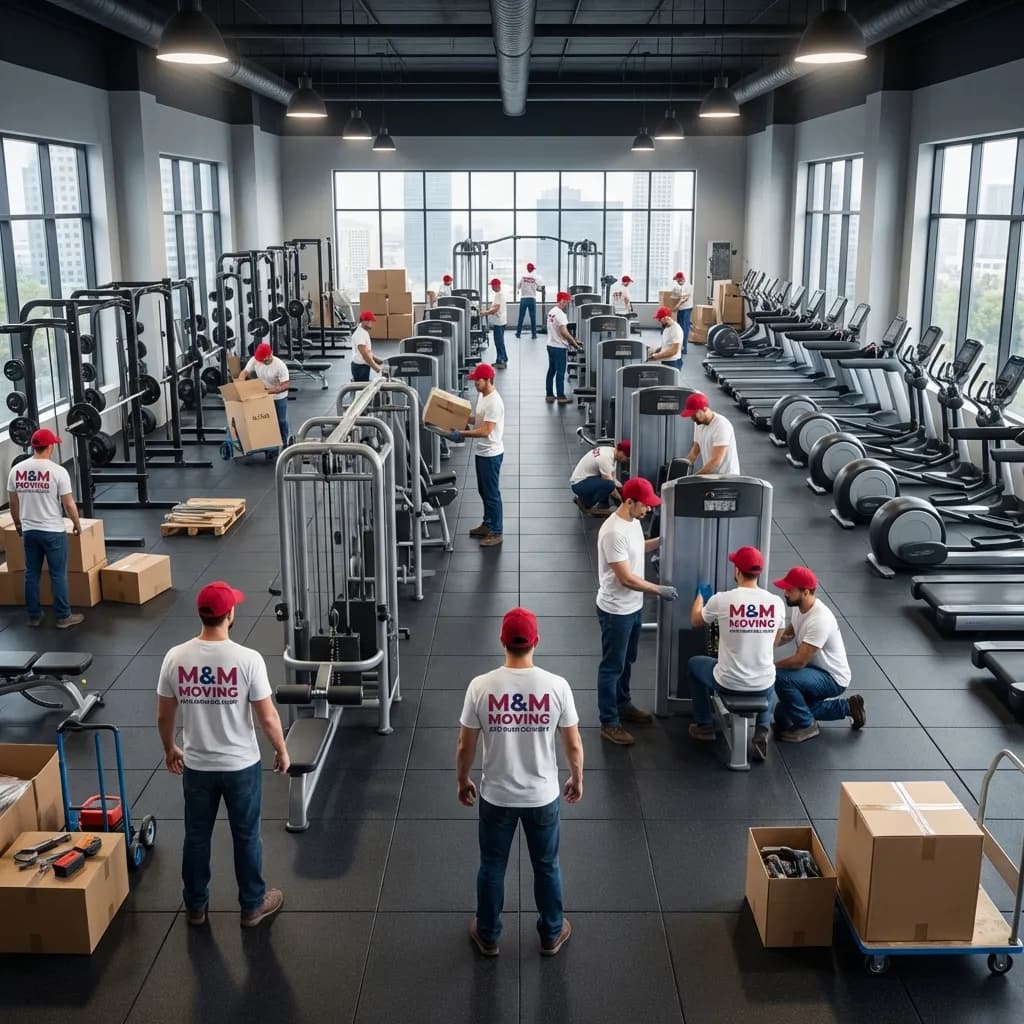
Call a professional when the route includes a full flight of stairs, a condo elevator, a machine over 250 lb, or a commercial treadmill. In the GTA, treadmill movers charge from $55 per mover per hour, including disassembly, protection and reassembly — about the price of one trip to the emergency room less. We also offer treadmill delivery and assembly for new machines and removal and disposal for old ones.
Frequently asked questions
Can one person move a treadmill? A folding home treadmill on flat ground, yes, using the transport wheels. Never on stairs.
Do I have to remove the console? Not always, but it protects the most fragile and expensive part. If the manual shows how, do it.
Can a treadmill be transported on its side? Briefly, in a van, if the deck is strapped and the motor end is supported. Do not store it on its side.
How much does it cost to move a treadmill? Professional treadmill movers in Toronto and Mississauga charge from $55 per mover per hour for local moves. See our gym equipment moving cost guide.
Will my floors be damaged? Not if you use runners or cardboard along the entire route and never drag the deck.
Need it done? Request a free quote or call 1-888-668-3007 — our gym equipment team moves treadmills across Toronto, Mississauga and the GTA every week.